
If you formulate shampoos, shower gels or facial cleansers, you’ll know the creamy white appearance your customers expect usually comes from a styrene/acrylate latex (SAL) opacifier. It’s been the default choice for decades, and it works well, which is exactly why so many formulations still lean on it. But SAL is a synthetic polymer particle, and that puts it in the scope of the restrictions on microplastics that are tightening across the UK and EU. At the same time, more of your formulations are probably moving toward sulfate-free ingredients, driven by consumer demand for milder, gentler products that don’t strip the skin or scalp.
So, how do you keep the visual richness that signals quality to your customer, without the ingredient that’s traditionally delivered it, and without compromising the mild profile you’re building the rest of your formulation around?
This blog looks at what microplastic-free, sulfate-free opacifiers do, how they perform and where they might fit in your formulation.
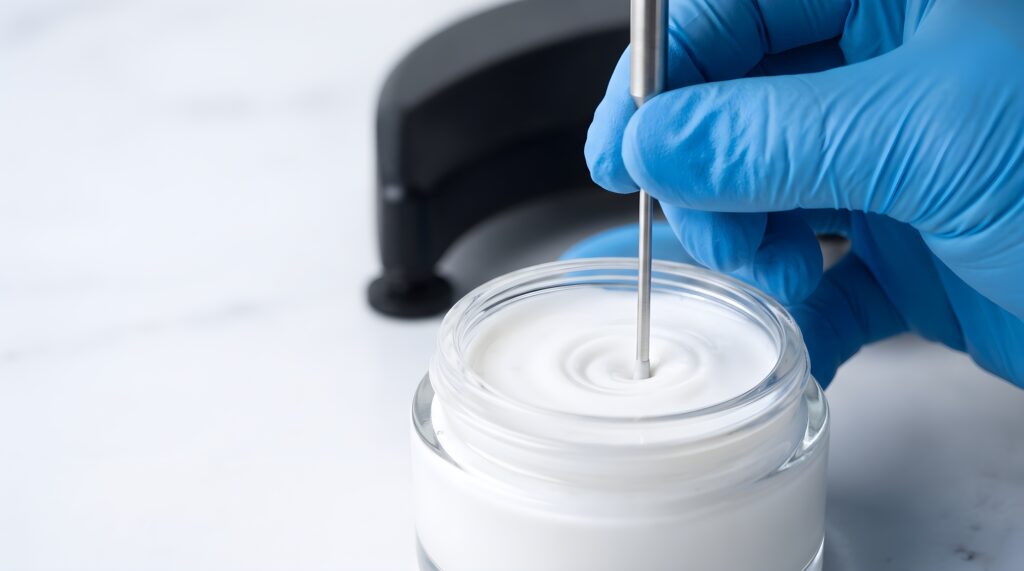
What do opacifiers do?
An opacifier is what gives a formulation a solid appearance instead of a clear or translucent one. It works by scattering light as it passes through a product, which the eye reads as smooth, even whiteness. Without one, a lot of shampoos, shower gels and liquid soaps would look and feel thin and watery, even if the formulation underneath them performs the same.
You’ll find opacifiers across most rinse-off personal care categories, and in plenty of homecare and I&I cleaning products, too, anywhere a manufacturer wants visual density rather than a clear finish.
Not every opacifier behaves the same way, though. Performance varies by surfactant system, dosage and how it’s processed.
What is a microplastic-free opacifier?
An opacifier’s job is to scatter light. It works by dispersing fine particles through your formulation that bend and reflect light to give it a smooth, creamy white appearance. Get it right, and your shampoo or shower gel will look and feel rich and premium. Get it wrong, and you’ll be left with a thin, cloudy or inconsistent texture from batch to batch.
SAL opacifiers have delivered that effect reliably for years, which is why they became the industry default. They’re cheap, predictable and formulators know exactly how to work with them. The trouble is what they’re made from. As solid synthetic polymer particles, they fall under the same regulatory scrutiny now aimed at microbeads and other persistent plastics in rinse-off products, since they wash straight down the drain and into wastewater systems that weren’t built to filter them out.
Microplastic-free opacifiers replace that synthetic polymer with a natural-origin alternative, built from renewable feedstocks and fully biodegradable. Look for one that’s RSPO Mass Balance certified and carries a high renewable carbon index, since these give you documented evidence to support a sustainability claim.
Why sulfate-free changes the opacifier conversation
Many opacifiers are developed and tested in conventional sodium lauryl ether sulfate (SLES) based surfactants, but they don’t always perform in the same way when you strip the sulfates out.
Mild surfactant systems behave differently at a fundamental level. They build viscosity and hold ingredients in suspension differently.
Their compatibility with your other actives can shift, too, since the surfactant matrix changes how it disperses, and how stable it stays over time.
So, an opacifier that looks fine on a spec sheet can still let you down once it’s sitting in your base. In a mild formula, its opacity might not be as stable, it might separate over a few weeks on the shelf, or you might need to use more than expected to achieve the performance you want, which can push your costs up.
Sulfate-free opacifiers can help close those gaps. They’re developed and tested specifically for milder surfactant systems, so are proven to disperse properly and stay stable in that environment.
Performance
Microplastic-free, sulfate-free opacifiers perform well against a range of benchmarks.
They deliver strong and stable opacity, giving you a creamy, white appearance without drift or separation across a product’s shelf life.
Typical dosage sits at 0.5% to 3.0%, which gives you room to fine-tune your formulation. Lower levels suit products where you want a lighter, more translucent finish, while higher levels build toward a fuller, richer opacity for products that need more visual density.
These opacifiers are cold-processable, so you don’t need to pre-dilute them before you add them to your batch. They can be added after pH adjustment to protect the stability of your finished formulation.
However, your base needs a minimum viscosity of around 4000 mPa.s for this ingredient to perform as intended. If your formulation sits below that, you’ll need to build viscosity first with your usual thickening system, or the opacifying effect won’t hold the way you need it to once the product’s sitting on a shelf.
Where microplastic-free, sulfate-free opacifiers fit
This is a rinse-off ingredient, so it isn’t really suitable for leave-on products which have different stability and skin contact considerations.
Within rinse-off, it works well in personal care products like shampoos, shower gels, liquid soaps and facial cleansers. In shampoos and shower gels, the creamy white finish is one of the strongest visual cues consumers associate with a well-formulated, premium product. By contrast, a thin, watery-looking gel feels cheaper in their hand. In facial cleansers, sulfate-free opacifiers let you deliver visual richness without undermining the mild, gentle profile you’re building the rest of the formulation around.
Liquid soaps and cleaning products benefit in a similar way. Consumers expect a certain visual density from a liquid soap, something that looks concentrated and effective, not diluted. These opacifiers give you a route to that appearance without incorporating the synthetic polymers that a growing number of your customers are trying to avoid.
These opacifiers are also biodegradable and microplastic-free, which addresses the regulatory direction of travel. And if they’ve got RSPO Mass Balance certification, it means the palm-derived feedstocks in the supply chain are certified as sustainable. It’s a widely recognised and credible standard that gives you a documented answer if your customers or retailers ask where your raw materials come from.
So, if you’re reformulating away from an SAL-based opacifier, or building a sulfate-free product that still needs a rich visual appearance, these opacifiers are worth trialling in your base.
Get in touch to request a sample or talk to our team about where they might fit in your personal care, homecare or I&I formulation.
